Sanctuary’s rescued rabbits represent rebirth and renewal

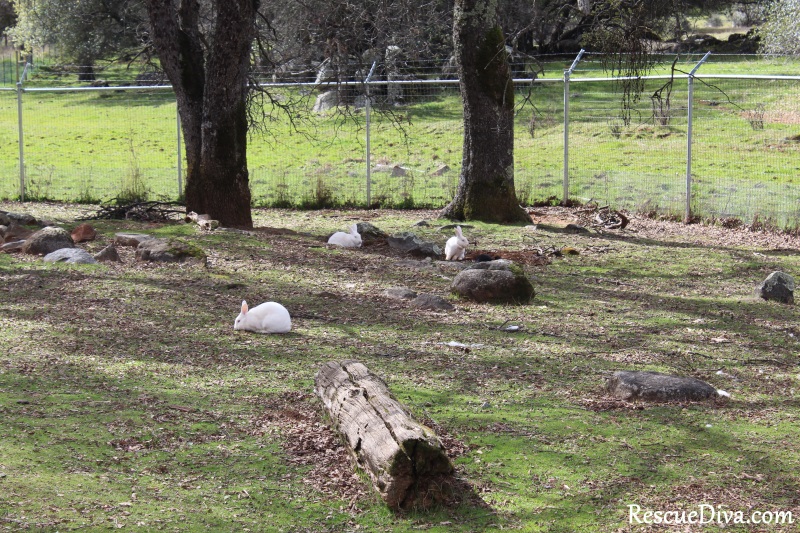
Bunnies rescued from research labs enjoy peace and plenty at Animal Place sanctuary in northern California’s Sierra Nevada foothills.
by Katerina Lorenzatos Makris
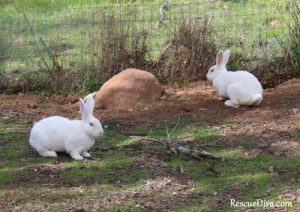
Hanging out in the fresh air and sunshine.
Many of the world’s Christian faithful celebrate the Easter season as a time of rebirth, renewal, and reawakening.
One of the most popular images for this sacred day is the rabbit.
Some say this symbolism traces back to Western European pagan cultures where spring festivals honored Eostre, the goddess of fertility, who was often depicted holding eggs and rabbits.
The ancient Greeks thought that bunnies could give birth as virgins, an idea that survived as a holdover in medieval art, where they were sometimes included in portraits of the Virgin Mary to remind us of her purity.
Then there’s the 18th-century German-American tradition of the “Oschter haws,” or Easter hare, wherein children would hide upside-down hats around their homes in hope that the mythical rabbit would fill them with treats.
Or perhaps the origin of Easter bunny symbolism is as simple as the fact that bunnies reproduce quickly, which reminds people of abundant spring and new life.
Gentle little souls

Bunny haven indeed–beautiful, bucolic habitat at Animal Place.
In any case, I’m reminded of several gentle little souls I met in February while attending the Animal Film Festival in Grass Valley, California. These lovely creatures were given their own rebirth and renewal, in a way, when they were rescued and brought to a tranquil, bucolic sanctuary nestled there in the Sierra Nevada foothills.
In the fresh mountain air scented with forest evergreens, frolicking amid lush grasses, and provided with first-class care by staff and volunteers, a couple of dozen bunnies enjoy safety, health, and freedom at Animal Place.
For some of these rabbits, true freedom means just being left in peace to be themselves and hang out among their fellows, with no pressure, expectations, or interference from humans.
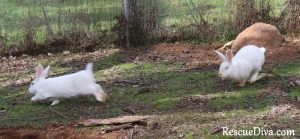
Frolicking
While leading a tour of the 600-acre sanctuary that houses a variety of farmed animals including bunnies, chickens, turkeys, cows, goats, and pigs, executive director and co-founder Kim Sturla said that most of the Animal Place rabbits are not socialized to people.
“We work closely with House Rabbit Society and SaveABunny, and we will take those that are not adoptable, because here, they don’t have to be socialized,” said Sturla.
They can just do their own bunny thing.
Some rescued from research labs and some abandoned pets facing death
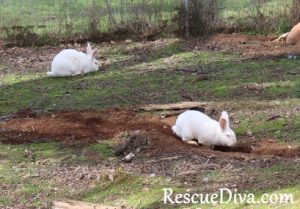
Nibbling on grass, digging in the dirt… just being bunnies.
Sturla said that five of the rabbits in Animal Place’s spacious, indoor-outdoor Moshe Schmidt Bunny Haven enclosure came from a research lab, where they were most likely used for testing. They were released from the lab through the efforts of Beagle Freedom Project.
According to the Animal Place Facebook page, many of the other Bunny Haven inhabitants, including a beauty named Larisa, were “rescued from a school that wanted to hire someone to kill 200 rabbits living nearby. A teacher abandoned two rabbits who had been used as classroom pets, and people in the community soon dumped their rabbits in the same area. Animal Place took in Larisa, and 15 other rabbits, to live out the rest of their lives at our sanctuary.”
Very lucky bunnies.
Rescue Diva’s favorite form of Easter-time bunny symbolism comes not only when animals are rescued and given a second chance for life, but also when they provide the rest of us with such beautiful examples of the rebirth, renewal, and spiritual purification that compassion for others brings to all our souls.
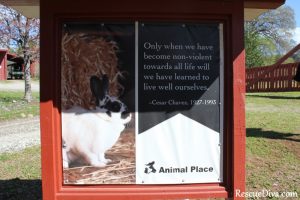
“Only when we have become non-violent towards all life will we have learned to live well ourselves,” reads a quote from Cesar Chavez on a sign near Bunny Haven at Animal Place.
Wishing our lovely fellow Rescue Divas and supporters a peaceful Easter season full of joy, health, and kindness!
HELP US SAVE ANIMALS — just $2 ! Rescue Diva depends on sales of our romantic fiction to help create real-life happy endings like those of Claire, of Noble, Granger, and Raza, and of Rhea and her Earthquake Puppies.
Enjoy a fun read, spice up your life, and help replenish our rescue fund! 🙂
Rescue Diva proudly sponsors needy animals in the U.S. and around the world. For example:
~ We help Kefalonia Animal Trust (KATs) in Greece provide free spay/neuter for hundreds of animals per year, which is one of the best ways to prevent the abandonment and misery of puppies like Noah and Kyla.
~ We donate to Center for Animal Protection and Education (CAPE), Praying for Paws, SoCal Siamese Rescue, Aniplant (Cuba) and many other groups.
~ We do in-the-trenches rescues of angels like Robin, Chance, and Tiger, with help from San Diego Animal Support Foundation, and of Marisol and Lisa, with help from Last Chance at Life.
Fun romantic story just $2 ! ALL profits donated to rescue groups!
DON’T MISS ANY DIVA! Hit FOLLOW button above.
Katerina Lorenzatos Makris is a career journalist, author, and editor. Her fiction includes 17 novels for Simon and Schuster, E.P. Dutton, Avon, and other major publishers (under the name Kathryn Makris), as well as a teleplay for CBS-TV, and a short story for The Bark magazine. She has written hundreds of articles for regional wire services and for outlets such as National Geographic Traveler, The San Francisco Chronicle, Travelers’ Tales, NBC’s Petside.com, Animal Issues Reporter.com, and Examiner.com (Animal Policy Examiner).
Together with coauthor Shelley Frost, Katerina wrote a step-by-step guide for hands-on, in-the-trenches dog rescue, Your Adopted Dog: Everything You Need to Know About Rescuing and Caring for a Best Friend in Need (The Lyons Press), coming soon in digital format!