World Spay Day Animal Hero: Interview with volunteer veterinarian in Greece

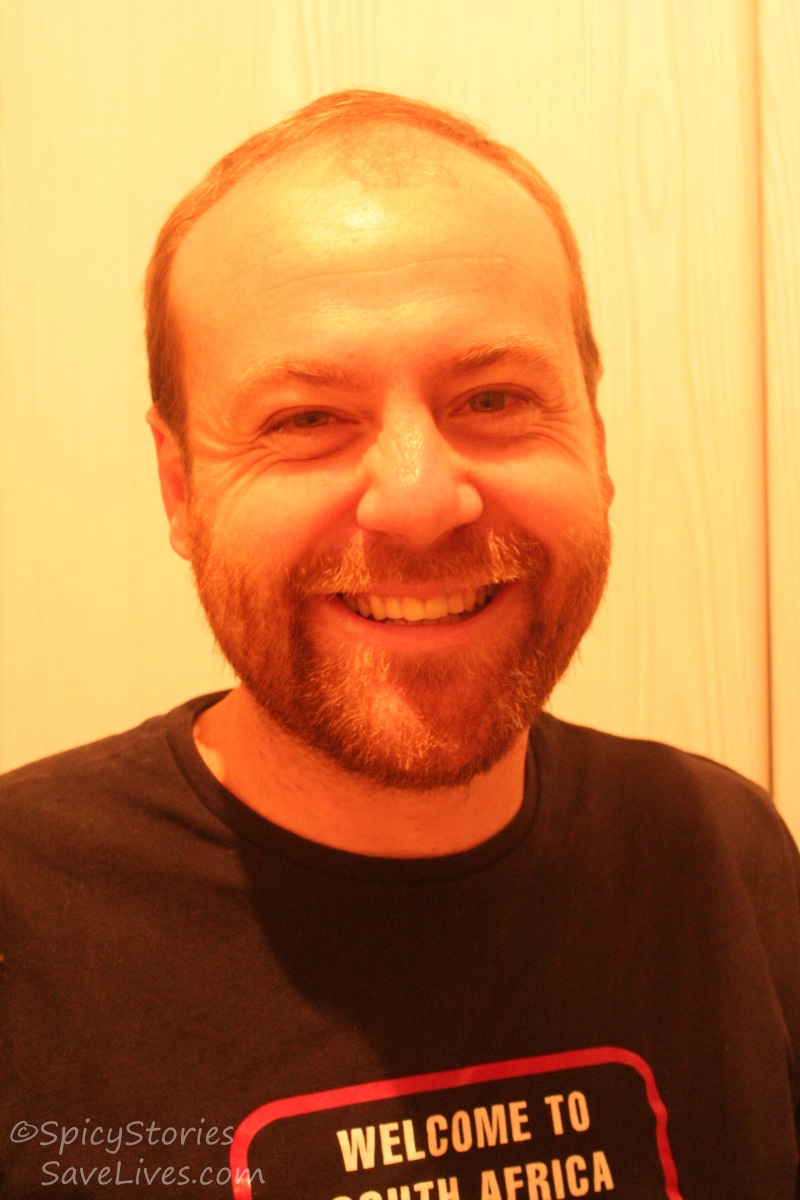
Dr. Joseph Hanekom, volunteer veterinarian
by Katerina Lorenzatos Makris ~
Most folks know there are volunteer doctors who travel the world to donate their services to humans in need, but a lesser-known brand of Good Samaritans are the veterinarians who do the same for needy nonhuman patients, including the furry Fidos and felines who can benefit from a little… shall we say… family planning?
Dr. Joseph Hanekom, originally from Africa, is one of those volunteer vets. I met him early one morning on the Greek island of Kefalonia. It was right after he’d chugged his coffee, and he was scrubbing up, getting ready to make some serious changes in the lives of dozens of kitties.
Kefalonia Animal Trust (KATs) had invited him over for a few days from the United Kingdom, hosting him in the home of group founder Pat Dolman. It was spring 2012, and just like every spring, the island’s population of puppies and kittens was about to soar.
The main goal of KATs, as described by Dolman, is to control that level as much as possible, and improve animals’ health, using donations to provide free or low-cost spay and neuter for pets of island residents, as well as for stray or feral animals.
KATs and other Greek animal welfare groups such as Animal Action Greece often receive the assistance of volunteer vets for spay/neuter programs in their ongoing, uphill battle against cat and dog overpopulation and suffering.
During that weekend one of the island’s resident vets, Dr. Lefteris Psarros, also donated a day of his time to the effort.
While Dolman and volunteer Sue Rudd helped him prepare the first patient for surgery, Dr. Hanekom took a few minutes to chat with Spicy.
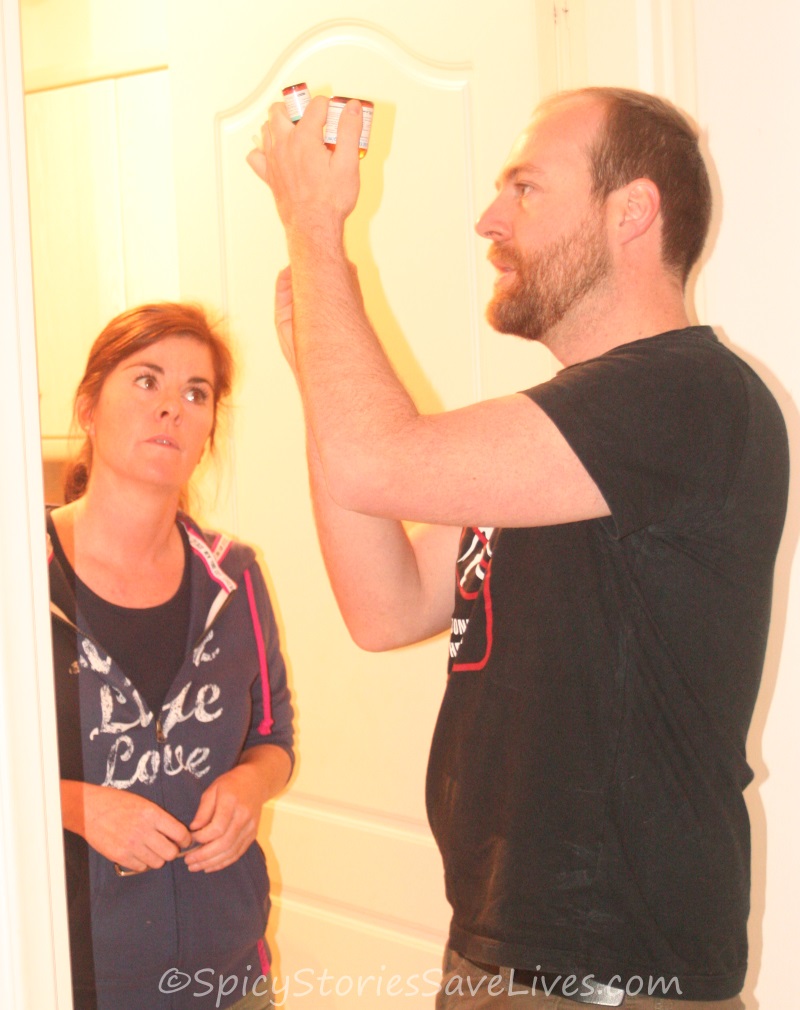
Dr. Hanekom prepares medications with help of KATs volunteer Sue Rudd
RESCUE DIVA INTERVIEW WITH DR. JOSEPH HANEKOM
Rescue Diva: Dr. Hanekom, where are you from?
Dr. Joseph Hanekom: South African origin, born in Zimbabwe, studied in South Africa, working in the U.K.
Rescue Diva: And now you’re visiting Greece.
Hanekom: Now I’m in Greece.
Rescue Diva: What motivated you to come to our island to do this volunteer spay and neuter work?
Hanekom: I’ve done it a couple of times in South Africa. I did work for a charity in Grenada in the Caribbean for a month. It’s something I really enjoy doing—community work and things like that.
I’ve done the neuterings in South Africa too, where there’s been like twenty vets and rooms full of people operating. It’s quite social. And it’s giving back. I’ve been lucky enough to be a vet, lucky enough to be clever enough to be a vet. And my family has always kind of given back, I think.
Rescue Diva: What do you think spay and neuter accomplishes? Why is it important?
Hanekom: I think the population control is going to be very hard to achieve in one campaign. But if it’s generalized, if everybody’s doing it, then you’ll reduce the population and each individual animal will get a better kind of life, being fed properly, looked after well, and have much more veterinary care and much better care individually.
Whereas if we’re just helping the individual animal I have no illusions that we’re reducing the animal population. We just can’t with this number that we’re doing. But if everybody’s doing neutering campaigns, this is a good start, just bringing awareness to the issue of sterilization.
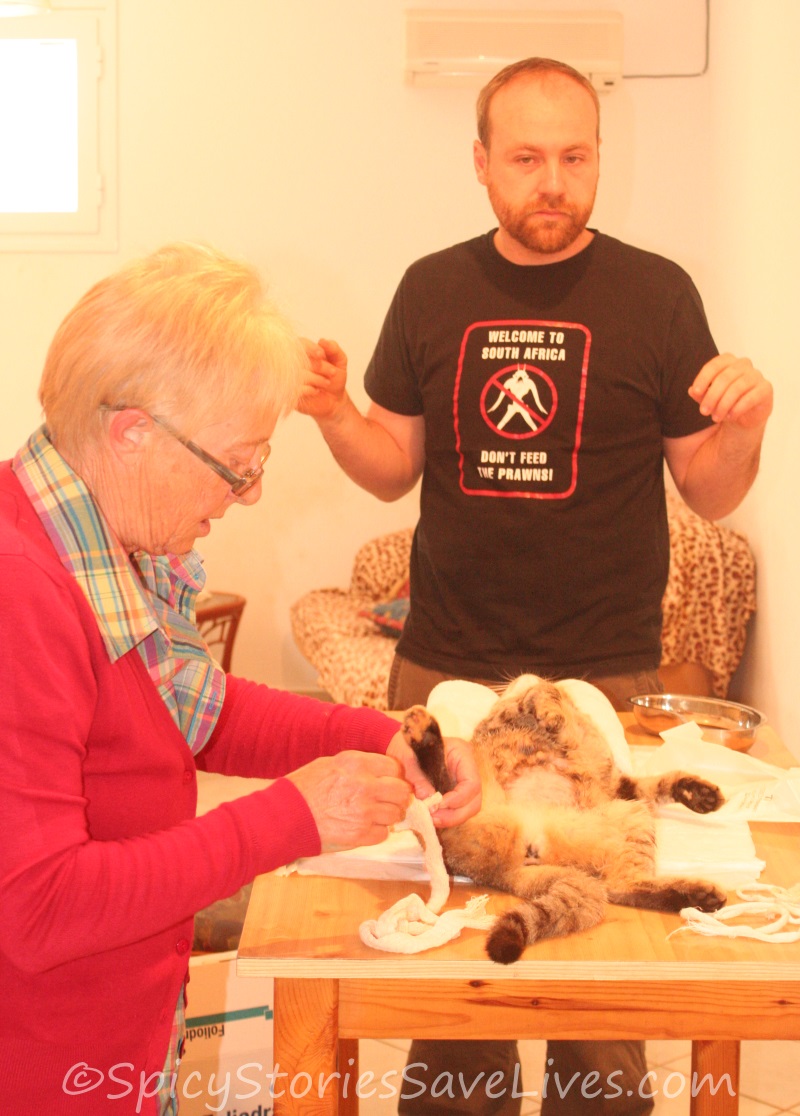
Dr. Hanekom supervises as KATs founder Pat Dolman helps prepare the day’s first patient for surgery
Rescue Diva: For people who are hesitant to have their animal sterilized…
Hanekom: Ah, for the individual animal it makes such a benefit. You can just see it in them. For the females, it takes such an effort to pump out kittens every year, and you can see it. They really lose condition. They lose weight…and they really struggle with that.
Male cats, apparently, on this island, they don’t really live very long because they’re fighting the whole time and kind of marking their territory, and fighting brings diseases of all sorts. So the individual animals will definitely benefit.
And I think releasing them back to where they’re from, it also kind of prevents new populations coming in, and less fighting again after your spay campaign.
Rescue Diva: You don’t live here in Greece, so you might not be familiar with all the issues involved, but given the economic crisis that’s hit Greece so hard, do you have any comments or thoughts about how this kind of volunteer work helps Greece as a whole?
Hanekom: I think it’s hard to see the bigger picture when you’re just doing one little thing, so I can’t really say because I haven’t been seeing the practices, but I think anything helps. It’s a first step, and it’s a very big step to begin.
I don’t know how much we achieve in terms of Greece as a whole, except I think it brings the issues to light. In terms of actually achieving, what Pat and the KATs group are doing, that achieves far more. It’s very hard to get past the individual animal and go on to the whole island. You kind of have to take things one animal at a time. You can’t be thinking, like, “what are we achieving for the whole country?” The issues are going to be kind of… “we’re changing attitudes.” Just bringing the awareness that animals should be sterilized, that animals should be looked after, animals should have veterinary care—that will reduce the disease burden on a lot of these animals and will potentially help them.
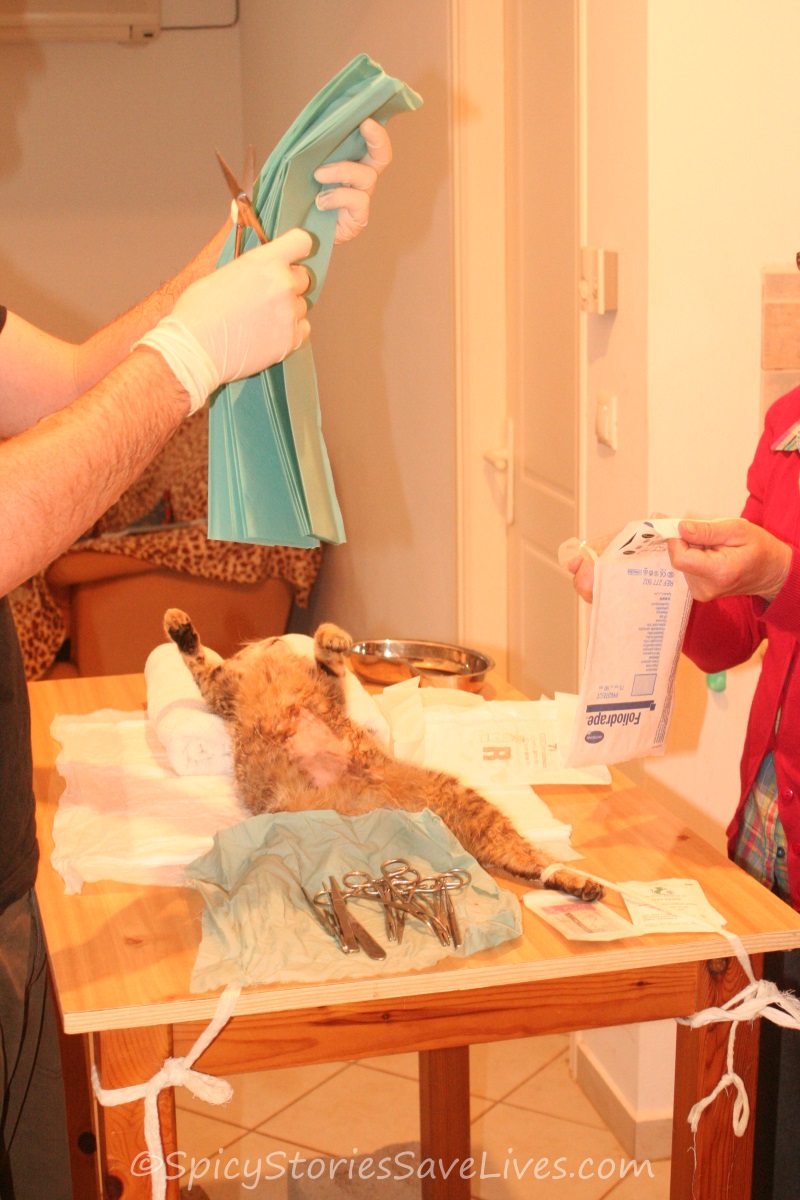
Dr. Hanekom and Pat Dolman prepare for surgery
Rescue Diva: Thank you for your time today. I’ll let you get back to work now. You have lots of patients waiting.
Hanekom: Yes I do. Thank you.
Results of that weekend’s spay/neuter event:
According to KATs figures, Dr. Hanekom and Dr. Psarros together neutered 46 females and 45 males that weekend, for a total of 91 cats. Of the females, 23 were pregnant with three kittens each.
From personal experience—almost two decades of doing rescue work in Kefalonia—I know that due to the many thousands of dog and cat births every year and the relatively low human population on the island (no more than 30,000), it is extremely difficult to find homes for puppies and kittens, and most soon succumb to illness or injury if left to fend for themselves on the streets or in the fields.
Preventing their births with widespread spay/neuter is the most merciful course, and the best weapon against animal suffering.
Don’t miss any Diva! Please hit the FOLLOW button above to receive email notification of our new posts!
Here at Rescue Diva, we depend on sales of our romantic fiction to rescue and sponsor animals, and to create real-life happy endings.
Won’t you please use a couple of bucks to enjoy a fun read, to spice up your life, and to replenish our rescue fund?
We, the animals, and our fellow rescuers will thank you kindly!
Rescue Diva proudly sponsors needy animals in the U.S. and around the world.
For example we help Kefalonia Animal Trust (KATs) provide free spay/neuter for hundreds of animals per year, which is one of the best ways to prevent the abandonment and misery of puppies like Noah and Kyla. Spay/neuter and education are the animals’ best hope for a better future.
Spicy Stories Save Lives and the author of this article have no affiliation with any rescue groups mentioned above, other than as a friend, volunteer, and donor.
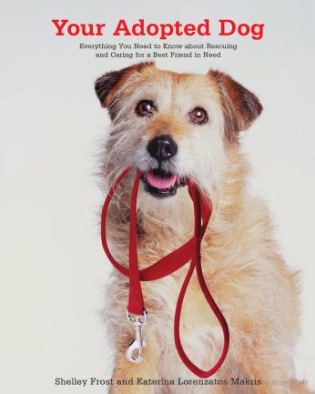
Seen our book? Your Adopted Dog: Everything You Need to Know About Rescuing and Caring for a Best Friend in Need, by Shelley Frost and Katerina Lorenzatos Makris, available through Amazon.com.