
Valentine’s Day pet safety tips

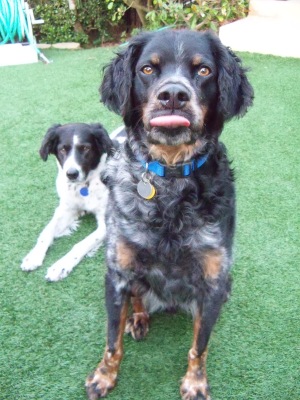
‘What do you mean we can’t eat chocolate???’ / Photo: Trisha Lord St. George
by Trisha Lord St. George
Beauty abounds on Valentine’s Day, with flowers, ribbons, lighted candles, chocolates, and candies, among other delights.
These are all pretty for us, but can be pretty dangerous for our pets.
As just one example, when I worked at a veterinary hospital I learned that a common cause of intestinal distress is the consumption of curling ribbon. While some pets we saw were were fortunate to be able to pass the ribbon (and yes, it still comes out curly) there was a cat who was not so lucky.
She came into the hospital with labored breathing. After radiographs, she was sent to surgery for removal of the ribbon which had twisted its way around her airway and digestive tract. This was a very unfortunate case where the kitty did not make it.
Another danger is the garbage can. Filled with bones and other scraps we didn’t consume, along with ribbon, tape, string, and other gift wrapping materials, it needs to go to the curb and sealed tight in a trash receptacle.
To keep your keep your furry Valentines safe on Valentine’s Day, beware of the following list of hazards, as advised by the American Society for the Prevention of Cruelty to Animals (ASPCA).
Flower bouquets
Lillies can kill cats who might eat them. Roses and other flowers have thorns that can pierce lips, tongues, and paw pads. (My note here: the flowers might have chemicals on them to keep them fresher—not so healthy if your pet licks or eats them.)
Chocolate
Caffeine-like stimulants in this delicious treat can affect pets’ gastrointestinal, neurologic and cardiac function, causing vomiting/diarrhea, hyperactivity, seizures and an abnormally elevated heart rate. The high fat content in some chocolates can bring on deadly inflammation of the pancreas. (My note here: eating chocolates or other candies with foil on them wouldn’t be a good thing for your pet either.)
Candies
The sweetener xylitol can cause a sudden drop in blood sugar resulting in life-threatening problems including seizures.
Cocktails, champagne, and other booze
Even a small amount of alcohol can do a lot of damage to pets, ranging from diarrhea to difficulty breathing to even a coma, so be careful with spilled or unattended liquor that they might lap up.
Candles and flames
Curious kitties and pooches might get burned if left unsupervised around any source of fire, or might cause one by knocking candles over.
Ribbons and wrapping
Tape, ribbons, bows, wrapping paper, cellophane and balloons may seem innocent, but these items which your pets think are fun to chew can lodge in throats and digestive tracts, causing choking, vomiting, or worse.
And that wouldn’t be pretty at all.
Wishing you a safe, pretty, and purry Valentine’s Day!
What to do if your dog eats chocolate
Trisha Lord St. George is a lifelong animal lover. Born in Buffalo, NY, one of her best childhood memories was “smuggling” a cat on a flight from Taos, NM to Buffalo (long story).
Trisha began her career in animal welfare in 1994 with non-profit animal shelters. Positions held included adoptions, pet encounter therapy and public relations. Being a veterinary assistant gave her opportunity to be part of a medical triage/animal rescue team during the Hurricane Katrina crisis.
Trisha acts in film, theatre and TV productions, sings for various groups around San Diego, volunteers with San Diego’s public broadcasting radio station and with VITAS hospice with fellow volunteer Isabella, her cat.
ALL MATERIAL ON THIS WEBSITE INCLUDING TEXT AND PHOTOGRAPHY IS PROTECTED UNDER COPYRIGHT TO KATERINA LORENZATOS MAKRIS OR THE AUTHOR NOTED. YOU MAY REPOST OR REPRINT A PARAGRAPH OR TWO WITHOUT PERMISSION, AS LONG AS YOU PROVIDE ATTRIBUTION TO THE AUTHOR/PHOTOGRAPHER. HOWEVER, IF YOU WOULD LIKE TO REPOST OR REPRINT MORE THAN JUST A PARAGRAPH OR TWO, THE LAW REQUIRES YOU TO REQUEST PERMISSION, WHICH YOU MAY DO VIA EMAIL TO youradopteddogATyahooDOTcom. Thanks!


Feb 15, 2013 @ 19:36:43
This is very helpful and useful information, Thank you
Feb 16, 2013 @ 00:02:54
Thank you for reading and for the kind comment, Melissa!