16 facts about Grinch dog Max, a hero who rose above abuse


HELP US SAVE ANIMALS — BUY A ROMANTIC STORY — JUST $2 !
by Katerina Lorenzatos Makris ~
As a kid I almost could not bear to watch the 1966 CBS television special How the Grinch Stole Christmas! because of how horribly the Grinch tortures his dog Max. Animal abuse was happening in my own family, so seeing it on TV, presented as humor, was total overload for me.
In later years I grew troubled by the fact that the many violent scenes in the film probably would not have been allowed on television or in a book, such as Dr. Suess’s original version of the tale, if the victim had been a human, at least not in content for kids. Because Max is just a dog, the violence was more palatable.
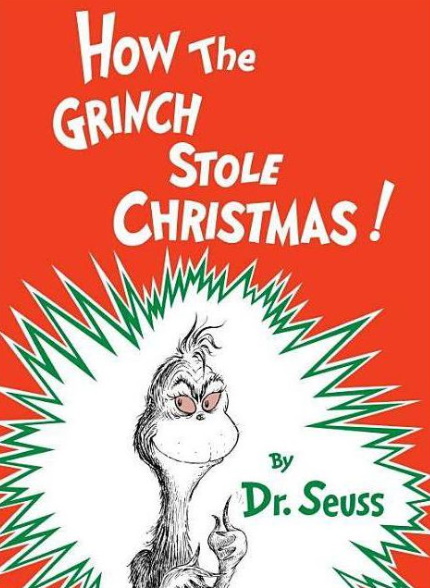
Nowadays I’m noticing more of the emotional abuse involved in that 1966 production, as well as in other incarnations of the Grinch and Max tale. When the Grinch isn’t injuring Max’s body, he’s trying to destroy his soul.
Max, “a long suffering but loyal dog,” struggles in the clutches of an owner who “likes to dampen other people’s fun and pleasure for his own vile and sadistic amusement,” as described by Wikipedia. Unfortunately there were a couple of folks like that in my family, too.
Recently I started wondering about the rest of Max’s story. Are we going to let the abuse define him? Aside from being the victim and survivor of one of the worst megalomaniacs in fictional history, who was Max, really? What more can we learn about him?
More importantly, what can we learn from this exemplary canine character, especially during this holiday season when many of us might be interacting with toxic relatives and other unpleasant folks?
Via a bit of Internet research, I turned up the following info…
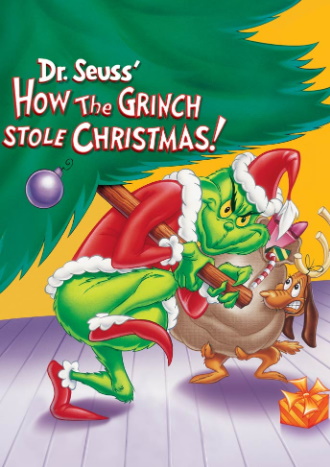
[Headline photo above is a screen shot from How the Grinch Stole Christmas! (1966)]
1. Max built an excellent reputation
“Max is the world’s greatest dog, let alone the Grinch’s best companion. Anyone should be so lucky to have a Max in their life.” – Benedict Cumberbatch, Max’s co-star in The Grinch 2018 feature film
“Max is the most lovable character from the movie… If it wasn’t for Max, the Grinch’s heart wouldn’t just be too small. It wouldn’t exist.” – Scott Mosier, who with Yarrow Cheney directed The Grinch
“’The Grinch’ scene-stealer: Max the faithful dog makes every heart grow three sizes” – Headline from USA Today article by Bryan Alexander
“Max from ‘How the Grinch Stole Christmas’: Unsung holiday pop culture hero” – Headline from The Washington Post article by Jen Chaney
“There is another character in ‘The Grinch’ who already knows what it means to be loyal and kind, who willingly wears a tree branch on his head without one whimper of complaint and who already recognizes that Christmas Day is in our grasp, as long as we have hands (or paws) to clasp. That character, of course, is Max the dog.” – Jen Chaney, The Washington Post
“We want as much Max content as we can get… In fact, we are kind of obsessed with the Grinch’s dog and he is why we love the story so much. Max is proof that dogs are truly the most loyal companions anyone can ever have.” – Kimberly Spinney, Dogoday.com
“Max helps convince the Grinch to do the right thing not only for all the people in Whoville, but also with Fred the Reindeer. And by always standing at his owner’s side, it is his friendship that keeps the Grinch from becoming a bad guy completely… I think Max is the true hero of The Grinch.” – Kimberly Spinney, Dogoday.com
“Let’s hear it for the hero of the hour. Three cheers for the doggy of the day! Let’s hear it now for Max, the hero. Let’s hear what these people have to say. He’s brilliant. He’s daring. He’s confident. He’s caring. There’s no one else like him around. He’s brave. He’s fearless, compassionate, and peerless. He’s kind. He’s gracious. Terrific and tenacious. There’s no one like this great heroic hound!” – Lyrics from a song in the episode “Max is a Hero” on The Wubbulous World of Dr. Seuss television puppet series
“MAX IS EVERYTHING!” – Comment by YouTube viewer Chelsea Fesik regarding a film clip about Max
BROWSE OUR BOOKSTORE FOR ROMANTIC TALES… ALL ABOUT ANIMAL RESCUE!
2. Max is a Boomer
Born in 1957, when Dr. Seuss (a.k.a. Theodor Seuss Geisel) wrote and illustrated the children’s book How the Grinch Stole Christmas!, Max is now 65 years old, an age that would qualify him for Social Security and Medicare.
3. Max is probably part pit bull
“It’s likely that Max’s genetic ancestry contains some American pit bull terrier, German shepherd, Labrador retriever, or Chihuahua—the four most common breeds in Embark-tested mixed-breed dogs,” suggests Mimi Padmabandu in an article for Embark Veterinary. “Not coincidentally, these breeds are also among the most common breeds found in shelters.”
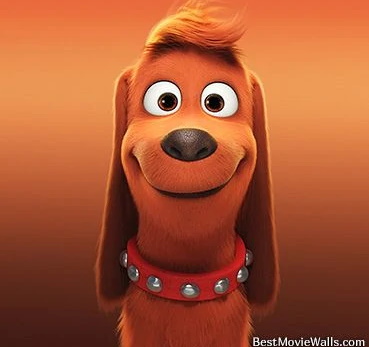
“In the 1966 animated film, his long muzzle looks similar to that of a beagle,” Padmabandu explains, “and his long body shape is reminiscent of a dachshund. His tan coat and dark brown ears could come from a number of different breeds, including the beagle or cocker spaniel. His scruffy appearance (also known as furnishings or a wire coat) could hint at some poodle or wire haired dachshund ancestry.”
She postulates further that “Max might have some hidden sled dog ancestry in him, too, because he’s surprisingly skilled at pulling the Grinch’s heavy sleigh!”
4. Max got his DNA decoded
In her article for Embark Veterinary, Padmabandu analyzes Max’s probable DNA, explaining why he looks the way he does.
For example, one of the genes that would give Max his brown coat is the Tyrosinase Related Protein 1 (TYRP1) that “helps determine whether a dog produces brown or black pigments.”
Regarding Max’s tolerance for the dizzying location of the Grinch’s mountain cave, Padmabandu speculates that his genetic profile might contain the EPAS1 gene found “in breeds from high-altitude areas, such as the Tibetan Mastiff… EPAS1 is one of the many genes that humans and dogs share. Scientists found that the same gene that allowed humans to adapt to high elevations also allowed their dogs to resist altitude sickness.”
5. Why the Grinch adopted Max
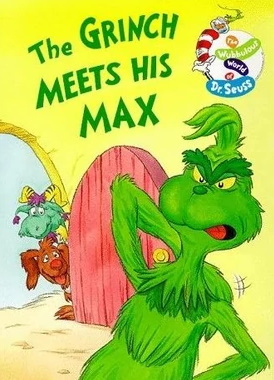
According to the children’s book by Antonia D. Bryan, The Grinch Meets His Max, as described by Isaac Carlson in a YouTube video, “One day when the Grinch has a very bad itch that won’t go away, he comes across a dog named Max. who wants to play.
“The grinch tries to explain he doesn’t like “kids, money, fun, nice, money, funny, rides and cakes with pink insides,” but Max doesn’t listen. When the Grinch throws a stick down a hole in hopes of getting rid of the dog, Max just comes back and scratches the itch for him. While this gesture may seem small, it means a lot to the Grinch.”
6. Max saved a baby from falling off a cliff
In the episode “Max is a Hero” on The Wubbulous World of Dr. Seuss, when the Grinch kicked a hapless hairy “thing” creature into the air, expecting Max to fetch it, the creature landed in a baby’s carriage, thereby propelling it toward a precipitous cliff. Max doggedly chased the carriage and just in the nick of time managed to bite onto the handle and tug it back from the brink.
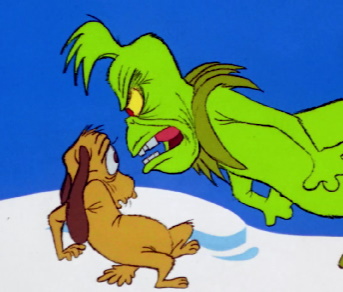
Max’s courage and heroism win great fame and praise from the townspeople, but from the Grinch he gets only anger, resentment, and jealousy.
True to form for emotional abuse, the Grinch commands, “Now remember, not another word about this hero nonsense. Imagine that–you a hero. [derisive laughter]”
7. Max lived for a while in a mayor’s mansion, but wanted to return to the Grinch
After saving the baby, Max is invited to live in the mansion of Mayor Stovepipe of the Wubbulous World local town, Topperville. There Max receives all manner of pampering, including a “truckload of treats” and a “velvet-lined spun silk slipper” upon which to chew. Yet he pines for his abusive owner, who he feels he has abandoned.
Again, that’s not an uncommon reaction for abuse victims. No matter how bad it was, and no matter how fabulous life might become after leaving, there is often a longing and nostalgia for what was more familiar.
“This emotional attachment, known as a trauma bond, develops out of a repeated cycle of abuse, devaluation, and positive reinforcement,” as described in an article by Crystal Raypole on Healthline.com. “Even if you manage to leave the relationship, you might have a hard time breaking that bond without professional help. You might feel incomplete or lost without [the perpetrator] and eventually return, simply because the abusive cycle is familiar and you don’t know how to live without it yet.”
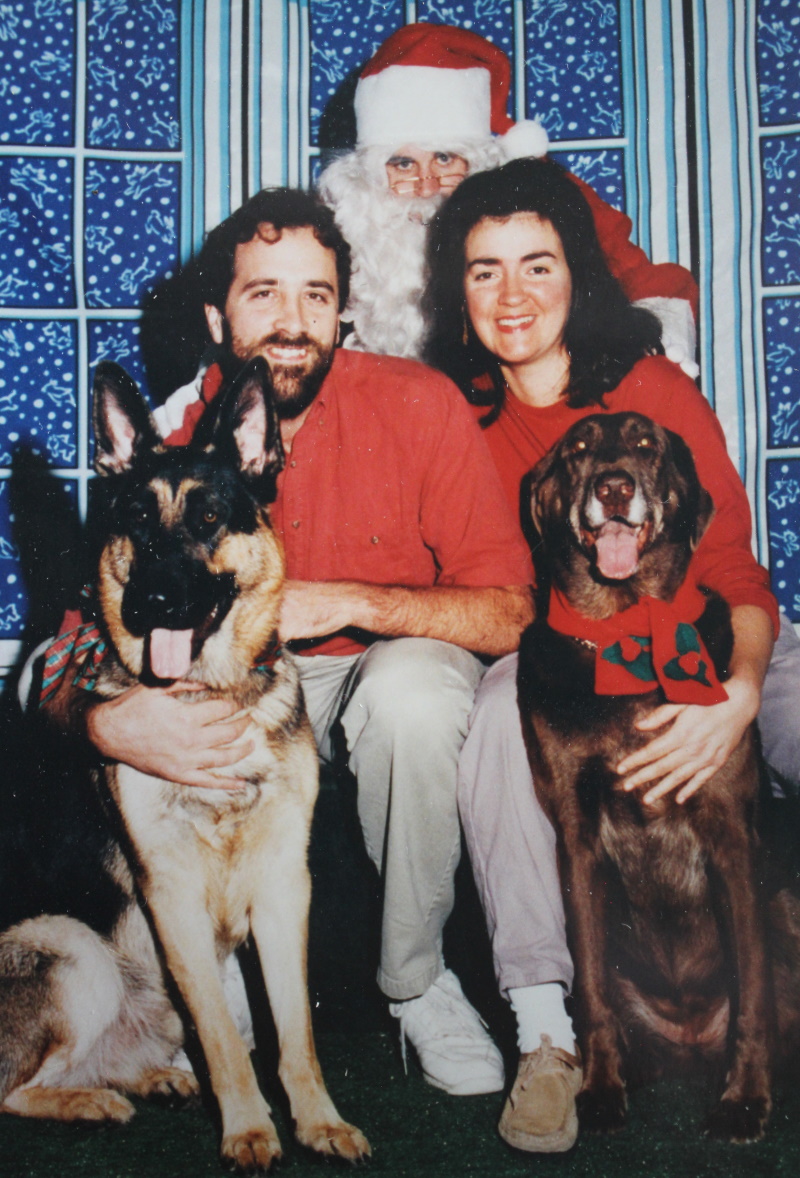
One of our dogs, our sweet Derby, suffered for years in a shockingly neglectful and abusive home. Yet after my husband and I adopted her, she ignored her posh, comfy bed, ate little, and only politely accepted our affection, because she preferred to camp at the front door, with her nose actually touching it, in the apparent hope of going “home.” It took nearly a month to convince her of the virtues of her new home, and help her let go of the past.
PLEASE SHARE OUR BOOKSTORE — HELP US SELL MORE to DONATE MORE! 🙂
8. Max’s creator Dr. Seuss, a children’s book author and illustrator, did not want children of his own, won a Pulitzer Prize, and perhaps indulged in a extramarital affair
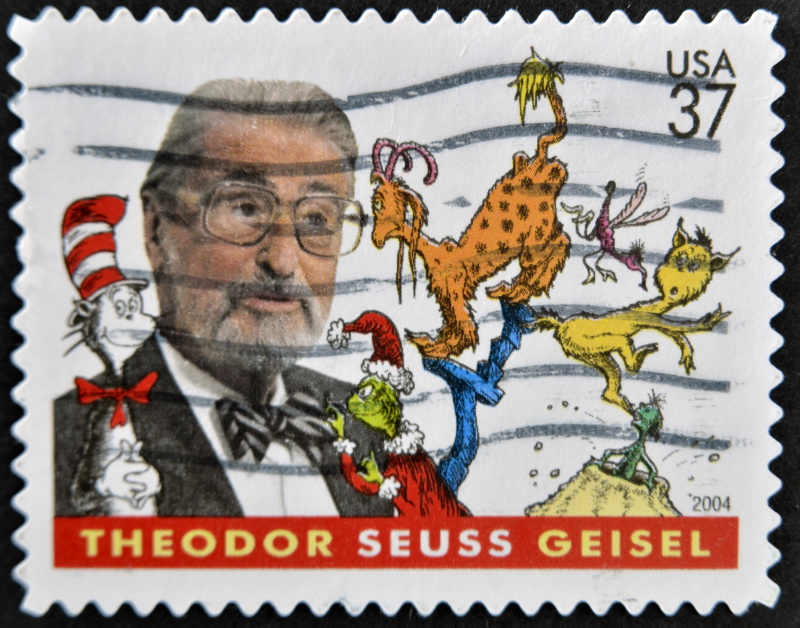
“Although he devoted most of his life to writing children’s books, Geisel had no children of his own, saying… ‘You have ’em; I’ll entertain ’em,’” according to The New York Times, as quoted by Wikipedia. “Geisel’s [first] wife Helen had a long struggle with illnesses. On October 23, 1967, Helen died by suicide. Eight months later, on June 21, 1968, Geisel married Audrey Dimond with whom he reportedly had been having an affair.”
Dr. Suess’s profile on Amazon.com reports that “his iconic characters, stories, and art style have been a lasting influence on generations of children and adults.” His books “have been translated into 45 languages.” A “long list of awards includes Caldecott Honors, the Pulitzer Prize, and eight honorary doctorates. Works based on his original stories have won three Oscars, three Emmys, three Grammys, and a Peabody.”
9. Max has his own book
At long last, when Max was already middle-aged, Dr. Seuss’s publisher Random House recognized that Max deserved to have a version of his own story told. Hence as of 2018 there is I Am Max, by Astrid Holm.
“Grow your heart three sizes and get in on all of the Grinch-mas cheer,” reads the Random House sales copy. “The story of how the Grinch almost stole Christmas as told by his canine companion, Max! Written in simple rhymed verse, this sweet, sturdy board book is an ideal introduction to the story and a perfect gift for toddlers and preschoolers too young for the classic picture book. Now everyone in the family can have a merry Grinchmas!”
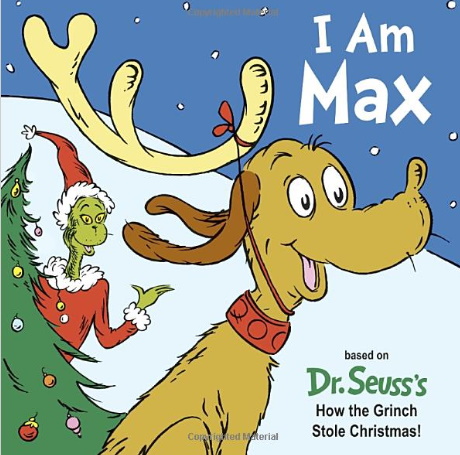
The story takes place after the Grinch’s supposed conversion to Nice Guy, so theoretically Max’s years of misery are in the past.
The Grinch likes to have fun,
I am happy to say.
But there once was a time
when he WASN’T
this way.
— I Am Max, by Astrid Holm
Like most abuse survivors, Max hasn’t forgotten. Being the long-time target of a lunatic’s gratuitous and sometimes life-threatening assaults can be a little hard to forget.
I realize that the Grinch tales are mere make believe, and that perhaps I’m being grinchy to question the pretty pictures, but as I view this book’s many images of Max smiling, I can’t help thinking about how extremely rare it is for psychopaths like the Grinch to truly reform.
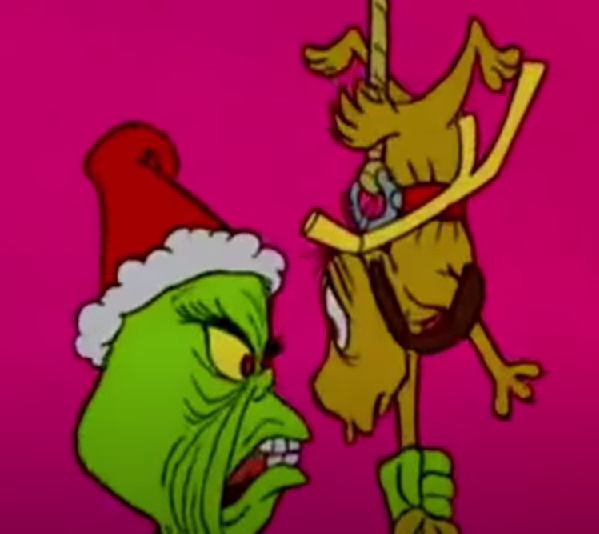
“To the best of our knowledge, there is no cure for psychopathy,” according to a Yale University article about the research of psychologist Dr. Kent Kiehl, author of Psychopath Whisperer. “No pill can instill empathy, no vaccine can prevent murder in cold blood, and no amount of talk therapy can change an uncaring mind. For all intents and purposes, psychopaths are lost to the normal social world.”
Kiehl discovered that “psychopaths have reduced gray matter in the paralimbic system of the brain. His longtime suspicions were confirmed: Psychopaths—who are unremorseful and antisocial—have fundamentally different brains than the rest of us.”
The good news is that researchers in Wisconsin developed a reward system involving candy bars and video games that helps create “staggering” improvements for severely troubled, criminal youth, gently guiding them off the psychopath path.
I find myself praying that the psycho Grinch in poor Max’s life, fictional though both characters may be, is one of the genuinely healed exceptions, and that the purveyors and consumers of the Seuss franchise are not just continuing to sugarcoat a case where Max still has no choice but to smile.
10. Max stars in his own mini-feature film
Max’s role in the Grinch franchise was expanded in 2018 with the debut of his own mini-feature on “The Grinch” Blu-ray, in which he tries to help his owner recover from a cold.
Again this sounds awfully familiar in terms of the abuser/victim dynamic. Like many victims, Max will go to the ends of the earth for his perpetrator, yearning to please and appease him.
11. Max is sometimes voiced by women
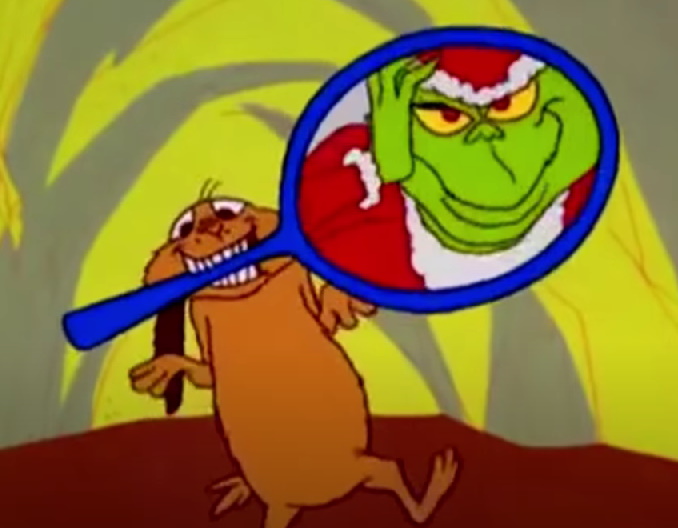
In another behavior that is typical for abuse victims, Max usually stayed silent, but in the Wubbulous TV series, thank heavens he was a bit more talkative, albeit in dog language.
Those vocalizations were charmingly performed by two female humans, Stephanie D’Abruzzo and Kathryn Mullen, according to Wikipedia.
12. Max is one of TV’s ‘greatest animals’
Selected as #20 on Animal Planet’s honor roll of the “50 Greatest TV Animals,” Max joined luminaries such as Lassie, Mr. Ed, Yogi the Bear, Rin Tin Tin, Bugs Bunny, Scooby Doo, Rocky and Bullwinkle, and Tom and Jerry.
I’m guessing that the Grinch would not have been too happy about Max’s ascendance to that list, and would have made the little dog pay for it. Abusers typically can’t tolerate being outshone. If their victim dares to do so, they’ll be punished.
Rescue Diva relies on sales of our fiction to create real-life happy endings like those of Claire, Tika, and Dolly. Enjoy a fun read while you replenish our rescue fund!
13. Max co-stars in a bestseller book and a blockbuster film
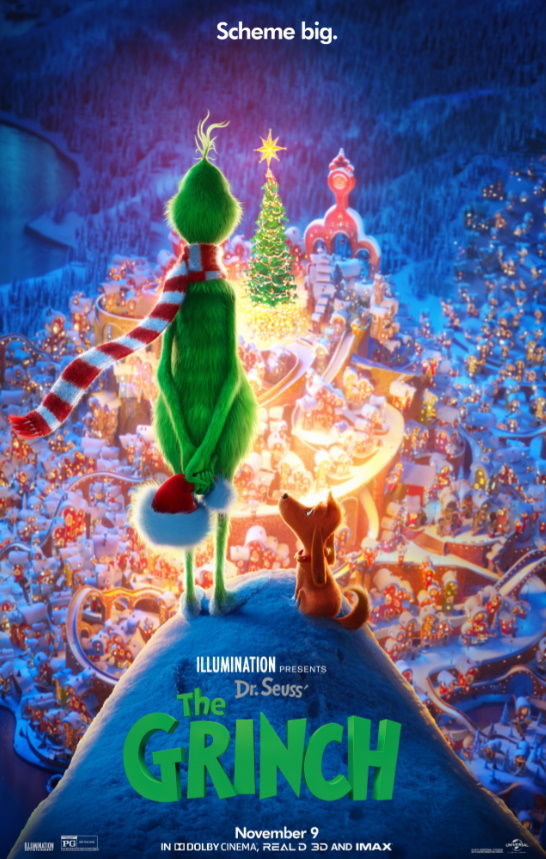
On Amazon.com, How the Grinch Stole Christmas! ranks as number 80 among all books, having sold more than 7.5 million copies. Its position is number 1 in “Inspirational & Religious Poetry” books, number 3 in “Children’s Christmas Books,” and number 4 in “Children’s Classics.”
When the CBS-TV special based on the book debuted in 1966, some 38 million Americans tuned in, according to Forbes. Today it still ranks as number 1 on TV Guide’s list of “Best Family Holiday Specials.”
The Grinch feature film of 2018 grossed more than $512 million worldwide, making it the highest-grossing Christmas film in history. It was also the highest-grossing of the three Grinch film adaptations.
Much of that success might be attributed to Max.
As The Grinch director Mosier said, “Max sees something the audience is not seeing. He knows this guy [the Grinch]. It’s that unconditional love that makes Max so appealing.”
In a way, that’s a classic enabler’s remark, praising a victim for giving unconditional love to someone who regularly hurts them and even threatens their existence. In reality, love should be absolutely conditional, requiring mutual consistency, respect and assistance, with no place for cyclical abuse and sick torture.
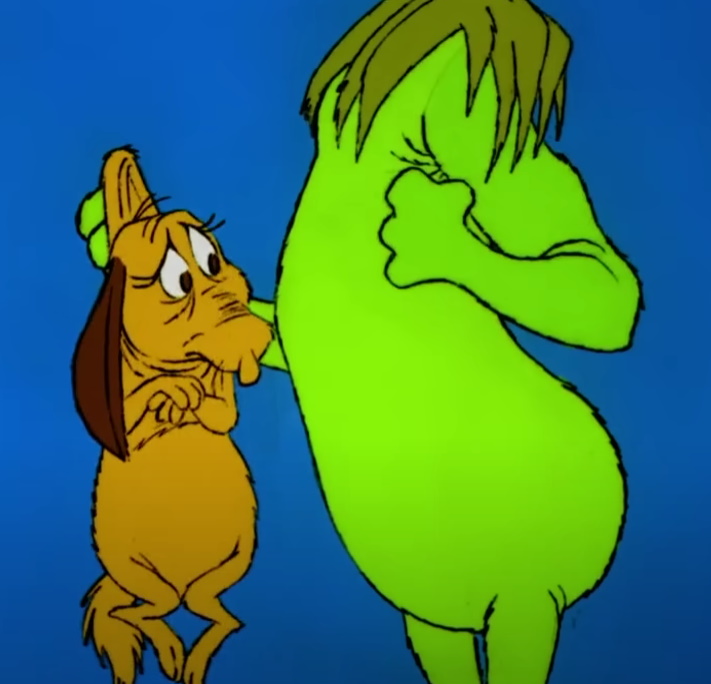
However, Mosier does make a valid point. It seems that what endears Max to audiences everywhere is his boundless loyalty, for better or for worse. His clinging to love, even a damaging love, resonates on a deep level.
Most of us who have been the target of abuse know how it feels to hope and pray that if we just hang on long enough, and keep nurturing and coddling the tormentor, they’ll eventually turn around.
Sadly that’s often only a fantasy. But it’s a seductive one that pervades our culture. We tend to place high value on forgiveness and perseverance on the part of victims, without commensurate attention to what we all can do to prevent and halt the crimes of abusers.
Granted, the 2018 feature film version of Suess’s tale gives us a Max who seems a little less terrified. Sometimes he dares to frown, roll his eyes, or make exasperated faces in response to his owner’s outrageous demands. This film also offers a Grinch whose pre-conversion character on the surface is much less scary than the menacing Grinch of previous productions. Benedict Cumberbatch voices the title role in a bland American accent that could be that of a suburban shoe salesman, far from the bone-chilling tones of Boris Karloff in the 1966 TV show.
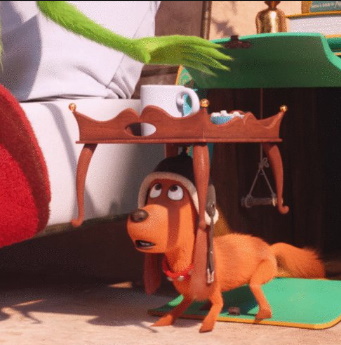
This watered-down Grinch speaks quite pleasantly to his dog, much the same as most of us would, offering praise, encouragement, and even some “pleases” and “thank yous.” Except most of us would not make our dog live in a kitchen cupboard, jump like a servant to our every beck and call via a system of bells on the wall, carry a table bearing our meals on his head, and plow through life with no toys or other doggy fun. Under no circumstances would we make him pull a sled loaded with several tons of stolen goods up and down precarious, icy mountain slopes.
I suspect the filmmakers cooked up this 21st century rendition of the Grinch because the over-the-top animal abuse committed by the Karloff-style “mean one,” before his transformation to Good Guy, would not have played well with today’s audiences, even in animated form.
Still, anyone who has endured an abusive relationship probably will recognize that even this milder Grinch remains a mean one, now just far more skilled in his manipulations. He’s the same control freak, same exploiter, and same maliciously antisocial criminal, but now employs underhanded passive-aggressive pretenses instead of outright bullying to get his way.
In some ways, that feels even more dangerous. It’s a form of gaslighting that makes it harder for victims to escape or protect themselves, because the abusers can seem so nice that their prey sometimes doubt whether or not there really is abuse.
Thanks, but give me Boris Karloff any day.
14. Max is a merch bonanza
You name it, and it’s got Max on it. T-shirts, men’s boxer shorts, plush toys, Christmas tree ornaments, inflatable yard figures, snow globes, stickers to affix to things like your water bottle… The list of Max merchandise goes on, generating loads of dough worldwide.
15. Max is a survivor
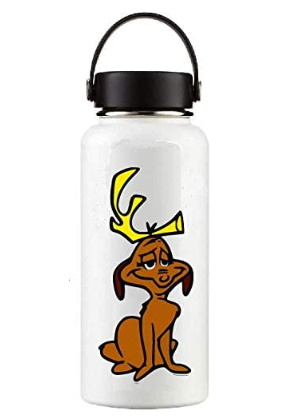
The earnest little brown dog suffered helplessly through egregious physical and emotional abuse perpetrated by a rageful owner who was warped by mental illness. Perhaps the Grinch’s diagnosis would be psychopathy, antisocial personality disorder, narcissism, or some combination thereof. Hard to say. What we do know, though, is that Max never lost hope, and never gave in to hate.
As described by Jen Chaney in The Washington Post, Max endured “merciless whipping, dragging a sleigh that nearly runs him over on several occasions and getting squashed by packages lobbed from the tops of Who houses.” He was forced to be “an unwitting accomplice in several of the Grinch’s crimes, which include but are not limited to: breaking and entering; burglary; trespassing; violating a restraining order that requires the Grinch to remain at least 25 feet away from Cindy Lou Who at all times; and the theft of Santa Claus’s and Dasher’s (or maybe Dancer’s?) identities.”
Like most others of his canine species, Max forgave the twisted trespasses of his human, again and again and again.
If Max were a human, some might critique such self-effacement as enabling his abuser, or as co-dependency, or even as masochism. If he wasn’t OK with the situation, we might ask, why did he stay and put up with it?
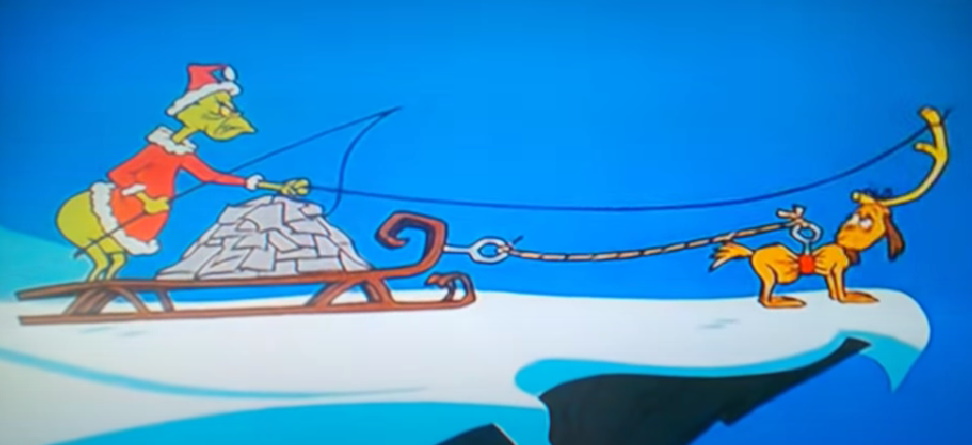
Certainly we all wish that Max could have escaped, or at least somehow stood up for himself. But blaming the victim isn’t useful. It’s just convenient. It’s society’s way of passing the buck for the wrongdoing, failures, or negligence of the perpetrators, as well as of those who should step up and help to stop the harm.
If Max had tried to escape, what would have happened to him? Presumably he was a stray before he earned a spot in the Grinch’s dingy cave by scratching the big smelly guy’s itchy back. So he must have known the hunger and the harshness of life on the streets, and would have been desperate to avoid returning to them. And I shudder to think of the consequences Max might have been dealt if he had dared to bite or otherwise fight back against his sadistic, control freak overlord.
Ideally someone would have rescued Max from his hellish home and placed him with a kind, loving, forever family. But law enforcement did not seem to be a strong suit of Whoville, the local town. Year after year the Grinch got away with all manner of crimes, including patterns of animal abuse that in many American states would have amounted to felonies.
On his own in a complex and dangerous situation, Max did what he needed to do, so as to not only survive the cruelty, but to move beyond it.
16. Max maintained integrity and compassion
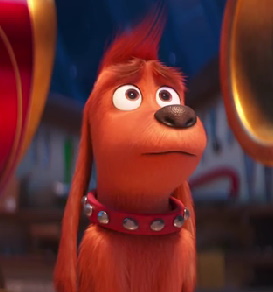
Throughout his ordeal, no matter how bad it got, Max upheld his own dignity and integrity, always trying to do the right thing. Sometimes he even managed to steer the Grinch’s criminal schemes in a less evil direction.
With an optimism and saintliness that few of us could muster, this peerless pooch endeavored to connect with and expand upon whatever drop of warm blood his criminally insane abuser might possess.
Max kept his soul intact. Though thrashed into submission and robbed of autonomy, he transcended his torment and rose far above his tormentor, never losing the tremendous power of his own compassion.
No one yet has demonstrated the true spirit of Christmas better than that.
DON’T MISS ANY DIVA! Hit FOLLOW button below.
Rescue Diva helps needy animals around the world, such as:
~ Diva assists Kefalonia Animal Trust (KATs) in Greece to provide free spay/neuter for hundreds of animals per year, which is one of the best ways to prevent the abandonment and misery of puppies like Noah and Kyla.
~ Diva donates to Center for Animal Protection and Education (CAPE), Praying for Paws, Southern California Siamese Rescue, Aniplant (Cuba) and many other groups.
~ Diva does in-the-trenches rescues of angels like Robin, Chance, and Tiger, with help from San Diego Animal Support Foundation; of Marisol and Lisa, with help from Last Chance at Life; of Mandi (Diamandi), with help from Graeske Hunde, and of Roki, with help from Stichting AAI.
About the author:
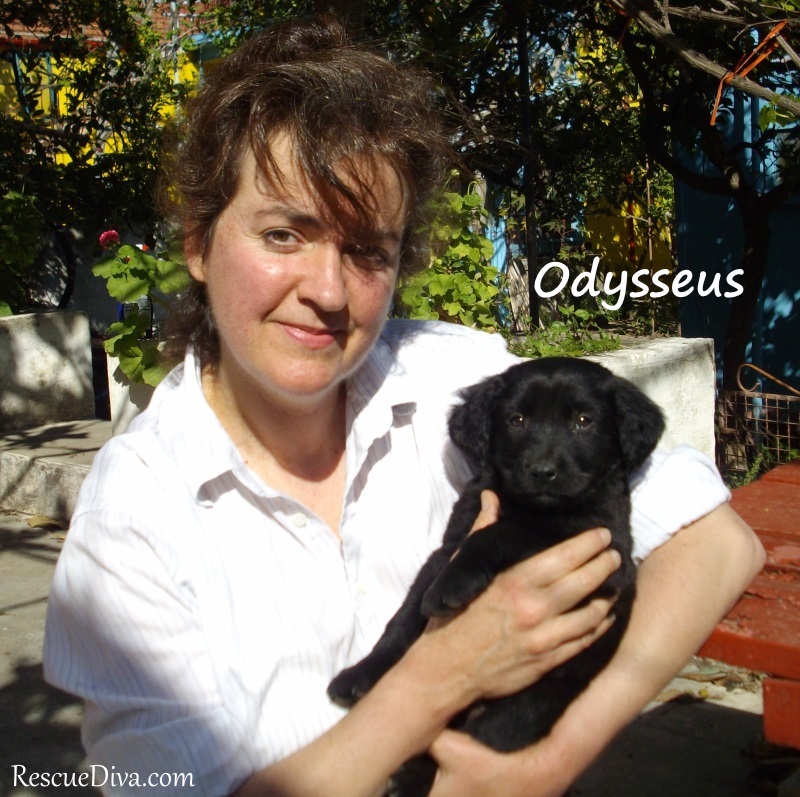
Katerina Lorenzatos Makris is a career journalist, author, and editor. Her fiction includes 17 novels for Simon and Schuster, E.P. Dutton, Avon, and other major publishers (under the name Kathryn Makris), as well as a teleplay for CBS-TV, and a short story for The Bark magazine.
Katerina has written hundreds of articles for regional wire services and for outlets such as National Geographic Traveler, The San Francisco Chronicle, Travelers’ Tales, NBC’s Petside.com, and Animal Issues Reporter.
Together with coauthor Shelley Frost, Katerina wrote a step-by-step guide for hands-on, in-the-trenches dog rescue, Your Adopted Dog: Everything You Need to Know About Rescuing and Caring for a Best Friend in Need (The Lyons Press), coming soon in digital format!