
‘Sends chills up one’s spine’: How elephants seem to grieve their dead

by Katerina Lorenzatos Makris ~
HELP US SAVE ANIMALS — BUY A ROMANTIC STORY — JUST $2 !
Given that death is a required part of life, we eventually need to accept this misfortune when it happens to someone we love. But meanwhile it hurts—a lot. It can be debilitating. Sometimes such departures hit us so hard that we can’t eat, or sleep, or work, or play. Recovery can take days or weeks, or stretch to months or even years.

After enduring the losses of several loved ones in the past few years, I’m currently going through a rough process myself. So I can testify to its difficulty.
Wrapped up in our own issues, we humans might see ourselves as the only species with the emotional capacity to grieve. But is that true? Do other animals mourn their dead too?
Scientists have identified many behaviors in our fellow earthlings that suggest expressions of confusion and sadness upon the passing of an individual with whom they were associated. Currently it’s impossible to know exactly what those creatures experience internally—what they’re thinking or feeling—but given their demeanors, some experts propose that losing a relative, companion, or friend might cause them misery akin to ours.
BROWSE OUR BOOKSTORE FOR ROMANTIC TALES… ALL ABOUT ANIMAL RESCUE!
‘Clearly indicates advanced feeling’
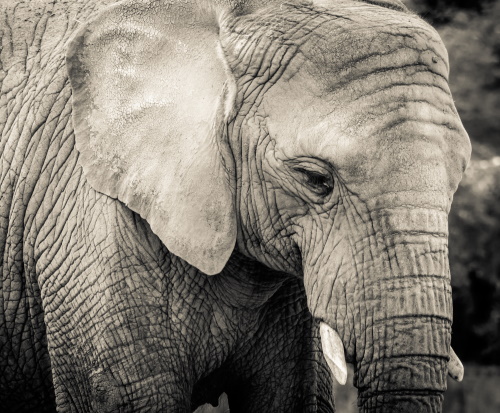
“Witnessing elephants interact with their dead sends chills up one’s spine, as the behavior so clearly indicates advanced feeling,” said George Wittemyer, associate professor in the Department of Fish, Wildlife and Conservation Biology at Colorado State University, as quoted by San Diego Zoo Wildlife Alliance.
Wittenmyer and colleague Shifra Z. Goldenberg studied how elephants react to other elephants’ carcasses at the Samburu National Reserve in northern Kenya.
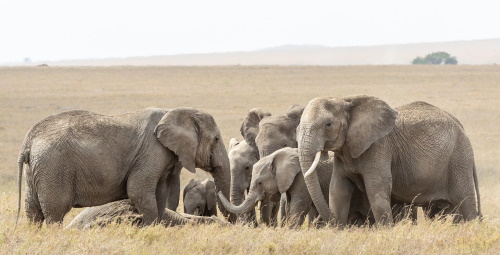
“The most commonly recorded behavior of elephants towards their dead included touching, approaching the dead animal and investigating the carcass,” said Goldenberg, an ecologist with the Smithsonian Conservation Biology Institute’s Conservation Ecology Center and a research fellow studying population sustainability at the San Diego Zoo Global Institute for Conservation Research.
Access to remains is important to many of us humans too. Cases where the body cannot be retrieved are often emotional torture for loved ones.
In most human cultures corpses receive a lot of attention. We touch the bodies because we loved so much the souls they once contained. We touch them to comfort ourselves. Soon the body will be gone, but for the moment it offers a last bit of earthly contact with our loved one. While touching we maintain physical connection for as long as possible.
PLEASE SHARE OUR BOOKSTORE — HELP US SELL MORE to DONATE MORE! 🙂
Seeking closure
As for the “investigation” of the remains that is performed by elephants, that is a common human behavior too. The cause of death is tremendously significant to us. Why did this person lose their life? What exactly happened to them?

Via our interactions with the deceased, and our investigations into the reason why they died, we can gain a highly therapeutic sense of closure. Answers help. Death is an alarmingly powerful, ultimately inevitable, and often mysterious force. Knowing all we can about how and why it took someone close to us can allow for easier coping and healing from the loss.
Perhaps it does the same for elephants as they gather and linger around the deceased, asking their own types of questions, seeking the answers they need.
Elephants’ temporal gland secretions—similar to human tears?
“The motivations underlying observed behaviors are hard to know, but clearly varied across circumstances and individuals,” Goldenberg observed. “For example, some elephants made repeated visits to a carcass, and it’s possible that temporal gland streaming by a young female at the site of her mother’s carcass is associated with heightened emotion.”
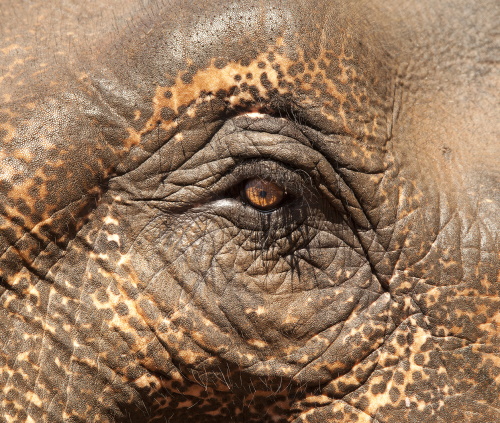
Reading this deeply moved me. On either side of the elephant’s head, the temporal glands secrete an oily, hormone-rich fluid called temporin, apparently when the individual is stressed or excited.
If temporal gland streaming can be associated with heightened emotion, as Goldenberg proposes, then one might draw a parallel to “streaming” from human tear ducts.
Mine, for example, have gotten quite a workout amidst my loved ones’ recent passings, including not only of eight of our senior dogs in the past four years, but my wonderfully supportive adopted “uncle” Giannis Gnesoulis last year, my own mom Spunky Stella last spring, as well as someone who was like a second mom to me—my high school teacher Christine Eastus.
It seems that the young female elephant who lost her mother might have felt much the same as did I upon losing my own dear ones.
Rescue Diva relies on sales of our fiction to create real-life happy endings like those of Claire, Tika, and Dolly. Enjoy a fun read while you replenish our rescue fund!
‘Heightened social interactions’ near the dead—like a funeral?
In their paper on “Elephant behavior toward the dead: A review and insights from field observations,” Wittemyer and Goldenberg wrote that they “witnessed elephants visiting and revisiting carcasses during which they engaged in extensive investigative behavior, stationary behavior, self-directed behavior, temporal gland streaming, and heightened social interactions with other elephants in the vicinity of a carcass.”
Sounds like a funeral to me. Isn’t this what we humans tend to do? We gather to mourn together, and to draw reassurance from each other’s presence.
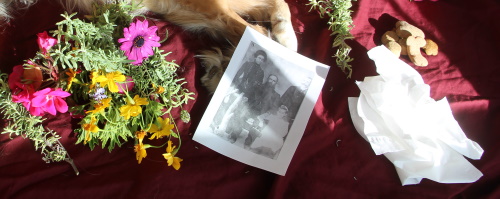
Similar to the elephants’ repeated visits to the body, I keep loved one’s remains at home with me for as long as possible before giving them to the cremation facility. I clean them, anoint them with herbal oils, and lay them in a quiet area, surrounded with flowers and herbs from our garden, candles, food, family photographs, icons of Greek Orthodox saints, and tissues used to dab family members’ tears, following an ancient Egyptian tradition of gathering mourners’ tears in small vials to entomb along with the departed, to remind them they’ll always be loved. I visit the bodies throughout the day and night, as many times as I need, to talk with them, cry beside them, and keep them company as they end one phase and begin the next.
Granted, elephants don’t use herbal oils or surround anyone with icons of saints, but do we really yet know what level of ritual and spirituality might be involved in their “funeral” activities?
‘Apparent emotionality’
The scientists noted that “Elephants show broad interest in their dead regardless of the strength of former relationships with the dead individual. Such behaviors may allow them to update information regarding their social context in this highly fluid fission–fusion society.”
I think that’s a scholarly way of saying that maybe there’s an evolutionary reason for elephants’ reactions to death. Perhaps it’s all part of a survival mechanism—gathering data to help them keep their social structure organized and strong, so that their herd can continue to function and reproduce.
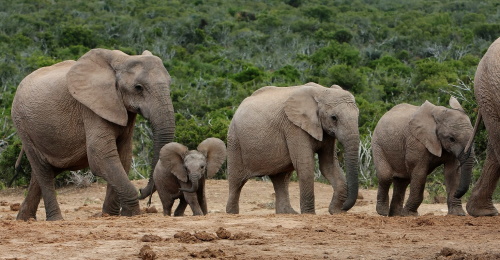
But then the researchers give a nod to further possibilities: “The apparent emotionality and widely reported inter-individual differences involved in elephant responses to the dead deserve further study.”
I agree, because abundant data indicate that indeed we are not the only ones on earth with the ability to mourn.
“Many nonhuman animals have been documented to take an interest in their dead,” Wittemyer and Goldenberg reported in their paper. “A few socially complex and cognitively advanced taxa—primates, cetaceans, and proboscideans—stand out for the range and duration of behaviors that they display at conspecific carcasses.”
Learning more about the “apparent emotionality” that experts observe in several species could deepen the understanding and compassion we need in order to more responsibly share this planet with all our magnificent nonhuman friends and neighbors.
Related article: Grieving an animal companion? Advice from Dr. Ayl
DON’T MISS ANY DIVA! Hit FOLLOW button below.
Rescue Diva proudly helps needy animals in the U.S. and around the world, such as:
~ Diva assists Kefalonia Animal Trust (KATs) in Greece to provide free spay/neuter for hundreds of animals per year, which is one of the best ways to prevent the abandonment and misery of puppies like Noah and Kyla.
~ Diva donates to Center for Animal Protection and Education (CAPE), Praying for Paws, Southern California Siamese Rescue, Aniplant (Cuba) and many other groups.
~ Diva does in-the-trenches rescues of angels like Robin, Chance, and Tiger, with help from San Diego Animal Support Foundation; of Marisol and Lisa, with help from Last Chance at Life; of Mandi (Diamandi), with help from Graeske Hunde, and of Dolly, with help from Stichting AAI.
Katerina has written hundreds of articles for regional wire services and for outlets such as National Geographic Traveler, The San Francisco Chronicle, Travelers’ Tales, NBC’s Petside.com, and Animal Issues Reporter.