
How my father’s violence led to $1,000 donation for great group Ruthless Kindness

HELP US SAVE ANIMALS — BUY A ROMANTIC STORY — JUST $2 !
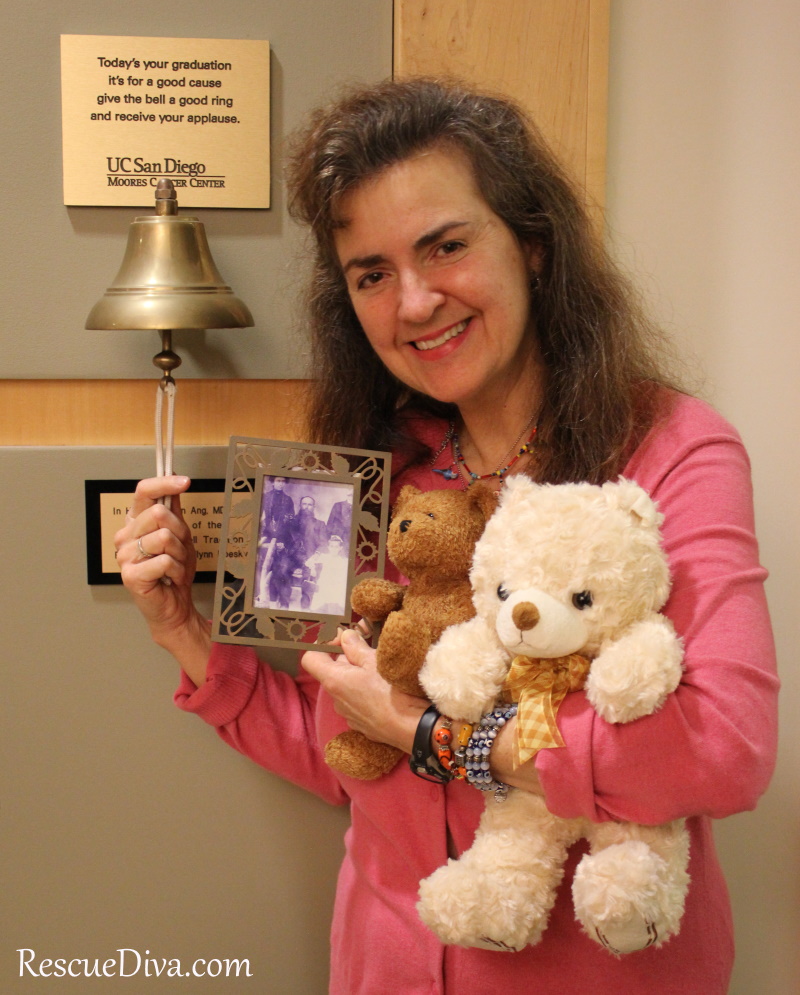
by Katerina Lorenzatos Makris ~
If my mentally ill father hadn’t spent so much time in federal prisons, would I be around today? At the very least, I know I would have spent many more days of my childhood and adolescence in danger.

As it was, some successful prosecutions by the United States government for his con artist schemes blessed me and some other family members with several reprieves from his physical and emotional violence.
Nevertheless, I (and others) did experience plenty of that violence in between the prison “vacations.”
TRIGGER WARNING: This article contains descriptions of physical violence and emotional abuse. Please take a moment to decide whether or not to continue reading.
PLEASE NOTE: If you currently feel unsafe and/or abused, there are folks waiting to help. You may dial 9-1-1, or contact the agencies listed at the end of this article to learn about free counseling and many other types of assistance.
A ‘bad child’
When I was a preschooler my father used his belts, a yardstick, and some sort of pointy, skinny weapon that felt like a whip on my backside. He frequently yelled in Greek that I was a paliopedo—a bad child. That I was “spoiled rotten.” That I needed to be “taught a lesson.”
When I entered puberty, he began slapping my face, making sure to include my mouth.
Strangely, he also seemed obsessed with the aesthetic appearance of that face. For example he wanted me to pluck my eyebrows. If I missed any offending hairs, he insisted that I re-pluck and “clean up that area.”
There were visits to a clinic for acne treatments of various sorts, such as digging out the pimples with a tiny, razor-edged scooper and no anesthetic. The treatments left scars, permanent skin damage, and a sense that my pain didn’t matter.
He also tried requiring me to wear make-up and more “feminine” clothing. That, thank heavens, Mom halted. In those years, ages ten to thirteen, I just wanted to be outdoors in T-shirts, shorts, and sneakers with my books, writing notebooks, cats, dogs, and whatever wildlife I could spy on. Makeup and plucking and pimple picking were my father’s fetishes—far from any interests of mine.
PLEASE SHARE OUR BOOKSTORE — HELP US SELL MORE to DONATE MORE! 🙂
‘You are fickle’
When I made it to high school, he segued to striking sharp, staccato blows to my temples and ears. On one occasion, after two boys in the same week sent me flowers, he hissed: “You are fickle. You are a heartbreaker. You will shatter men’s souls then never give them the time of day.” Due to the fact that he rarely allowed dating, it seemed unlikely that much heartbreaking could occur, but I knew better than to argue.

On another occasion, in response to my pleas to be allowed to apply to colleges other than the one—and only one—he had selected: “You are melodramatic. You exhaust everyone with your theatrics.”
In spring of my senior year he suddenly locked me in my room, told teachers I was ill, and didn’t let me attend school for a week. For me this was the worst punishment, since I thrived on the nurturing tutelage of three teachers who, although I never told them about the home situation, had nestled me under their wings, feeding my dreams and ambitions for the future.
All my father’s violence and abuse flowed from little or no apparent provocation. Our mom raised well-behaved kids. Neither I nor any of my siblings was a paliopedo. We did well in school, seldom “talked back,” looked after each other, and took all the emotional, legal, and financial turbulence in stride.
To this day I have no clue what my father imagined I had done wrong prior to most of the violent attacks. He rarely bothered to explain.
BROWSE OUR BOOKSTORE FOR ROMANTIC TALES… ALL ABOUT ANIMAL RESCUE!
Vicious attack on our dog
After college, when I went home for a visit, our family’s sweet German shepherd Zoe became frightened of a thunderstorm and sneaked into the house, which my father forbade. He cornered her in the hallway. She cowered. He began kicking her abdomen while yelling, “This should teach you! You’re a bad dog! Now you’ll know where you belong!”
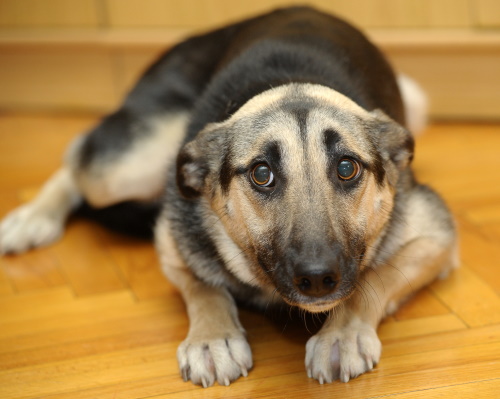
As his shoe struck her belly there were thuds and the most sickening sound I have ever heard—her muffled whimpers. She lost bladder and bowel control. That enraged him further.
Before that moment I had never stood up to him very much. But there was no way I could let him torture her, or perhaps even kill her.
He seemed shocked when I shouted at him to stop. I stepped forward and placed myself between him and Zoe.
He threatened, “Get out of the way or you’re next!”
Having recently completed a self-defense class, and armed with fierce love for my sweet girl, I managed to stand firm and calmly reply, “Make my day.”
I think there was one main reason, aside from the self-defense training, why I wasn’t afraid. I could see in his eyes that he realized he had reached a boundary. All my life he had used me and others as physical and emotional punching bags. That had been allowed. But this—a vicious attack on a terrified dog—would not be allowed. He knew he had bumped into my limit, and that he would have to kill me to go beyond it. Making a quick calculation, he must have decided the benefits weren’t quite worth the risks.
He walked away.
Rescue Diva relies on sales of our fiction to create real-life happy endings like those of Claire, Tika, and Dolly. Enjoy a fun read while you replenish our rescue fund!
Pandemic of abuse and violence
Fast forward a few decades… I’m sitting at my desk in my home in California. For my website RescueDiva.com I’m writing an article about a dog who needs a forever family. A red-tailed hawk soars over the backyard, and a breeze brings a salty whiff from the Pacific a few miles away.
My father has been deceased for more than 20 years, yet when I run across an Internet notice about October being National Domestic Violence Month, a movie-like montage of the incidents described above, and many more, plays in my head.
Over the years since leaving my family’s home at age 19, I encountered violence from people other than my father, including sexual assaults and two muggings. There has also been intense emotional abuse from other individuals.

Unfortunately I’m not alone.
. In its 2020 report on “Preventing Violence Against Children,” the World Health Organization (WHO) estimated that “one billion children [one out of two children in in the world] aged two to seventeen years experienced physical, sexual, or emotional violence or neglect” in the previous year.
. WHO also found that globally about 25% of children under age five live with a mother who is a victim of intimate partner violence.
. A group of university researchers wrote: “Family and domestic violence including child abuse, intimate partner abuse, and elder abuse is a common problem in the United States. Family and domestic health violence are estimated to affect 10 million people in the United States every year. It is a national public health problem, and virtually all healthcare professionals will at some point evaluate or treat a patient who is a victim of some form of domestic or family violence.”
. According to the U.S. Centers for Disease Control and Prevention (CDC), “Intimate partner violence is common… It affects millions of people in the United States each year… About 41% of women and 26% of men experienced contact sexual violence, physical violence, and/or stalking by an intimate partner.”
. As for emotional abuse, “Over 61 million women and 53 million men have experienced psychological aggression by an intimate partner in their lifetime,” the CDC reports.
. Even in the workplace, as many as about 13% of men and 12% of women regularly experienced verbal abuse, as discovered by nonprofit research organization RAND Corporation.
Statistics like those show that it’s no exaggeration to say that physical violence and emotional abuse in families, intimate partnerships, and other non-stranger relationships amount to a pandemic around the world.
“Abuse” is the term used to describe acts or behaviors that are damaging in nature. They are done to purposely cause physical or emotional harm to a person. When a person suffers from abuse, they are mistreated by someone who is looking to benefit in some way from the abusive behavior. There are many forms of abuse, including physical, sexual, verbal, and emotional.
“Verbal abuse” is a form of mental abuse that is designed to undermine a person and how they feel about themselves. Abusers also use this type of abuse to help maintain a level of control or power over the person being abused.
— from “6 Examples of Verbal Abuse” by Angelica Bottaro
The best cure
We survivors sometimes seek psychological counseling to get us through the long-term trauma inflicted by perpetrators. For me, counseling has been essential and immeasurably helpful.
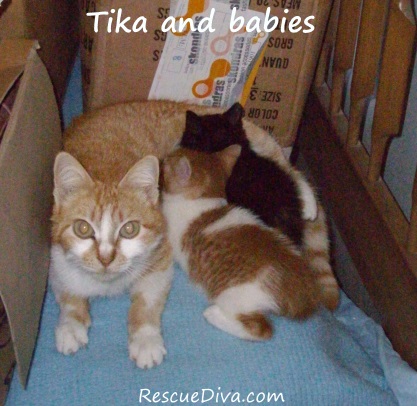
But the absolute best therapy has been my work for animals—the in-the-trenches, hands-on rescues off the streets, the fostering till they found forever families, the sponsoring and donations to assist other rescuers in their own work, and my writing about the whole woeful yet wonderful world of rescue.
Nothing on earth is more healing for me than those efforts.
So right after the violence and abuse “movie” played in my head, I knew what I needed to do.
Ruthless Kindness
An Internet search for “domestic violence and animals” turned up some organizations who assist survivors of domestic violence (DV) to escape their abusers and relocate along with their dogs, cats, or other companion animals.
One such group, Ruthless Kindness (RK) in Sebastopol, California, caught my eye for three reasons: 1) it was founded by two veterinarians, 2) their work is very much “hands-on” and 3) they dream big.
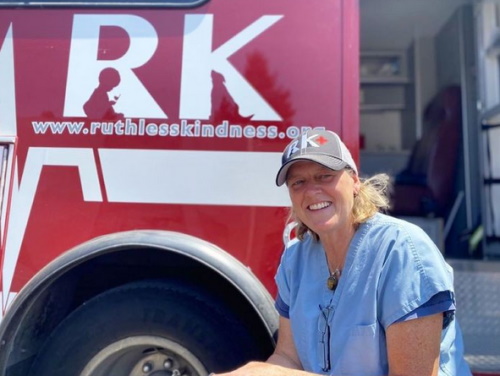
Dr. Sarah Reidenbach and Dr. Kate Kuzminski state that their mission is “to address the epidemic of violence and preventable suffering in at-risk animals and people.”
RK’s services include:
. Free mobile veterinary care and vaccines for the companion animals of domestic violence victims and others in crisis.
. Free on-site vet clinics for vulnerable individuals at locations such as homeless and domestic violence shelters.
. Free veterinary tele-support “for at-risk individuals, families, and shelters to prevent toxic stress and abandonment.”
. Educational materials to “reduce physical, sexual and emotional harm to people and animals in the home.”
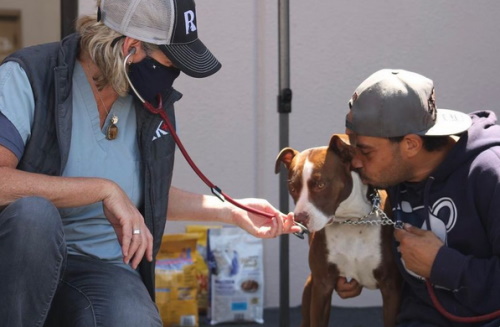
. Innovative humane and empathy education outreach for children.
. Farm animal rescue at their sanctuary in Sebastopol to “help those who are subject to inhumane treatment.”
Statistics and a dream
Dr. Reidenbach and Dr. Kuzminski cite several motivations for their work, such as:
. “48% of victims will delay or not leave a dangerous environment if they can’t bring their pet with them. Up-to-date vaccines are required for pets of victims to enter pet-friendly safe houses, domestic violence shelters, apartments, and pet boarding facilities. Our services remove an obstacle for victims, children, and pets escaping harm.”
. A study of pet-owning families with substantiated child abuse and neglect found that animals were abused in 88% of homes where child physical abuse was present (DeViney, Dickert, & Lockwood). Different reports state that around 1 million animals are abused each year in association with domestic violence. (HSUS). A study of women seeking shelter at a safe house showed that 71% of those having pets affirmed that their partner had hurt or killed their companion animals (Ascione).
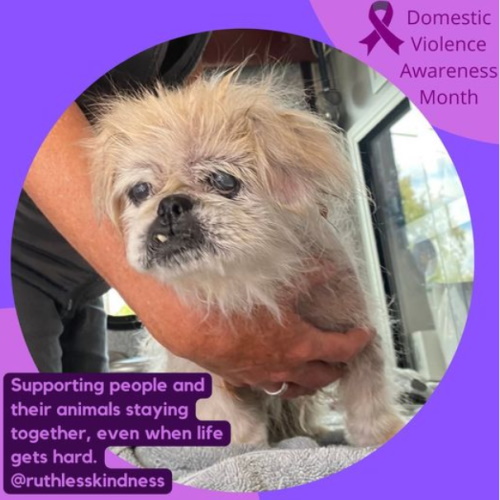
. Financial hardships can endanger both human and nonhuman family members. “Food, shelter and medical challenges… sometimes require painful decisions that put both the pets and family units in jeopardy. “
“People who need veterinary care often need other resources,” Dr. Kuzminski told the Santa Rosa Press Democrat. So she and Dr. Reidenbach plan to “branch out and loop more social services into a kind of comprehensive care clinic,” to help pave the way for clients to access housing, employment, and mental health resources.
Immediately after browsing through this and other information on the Ruthless Kindness website I sent them an email. Dr. Reidenbach replied that evening, accepting Rescue Diva’s offer of $1,000 to launch a matching funds drive, with the goal of raising a total of $2,000 for their group.
Three steps to recovery
These days, when images of my father’s violence surface, my first step is to do what the therapists teach:
Don’t block the memories. Let them come. Let them roll through and away from you like waves in the sea, while staying aware of where you are now, and how safe you are now.
— Coping tip for trauma
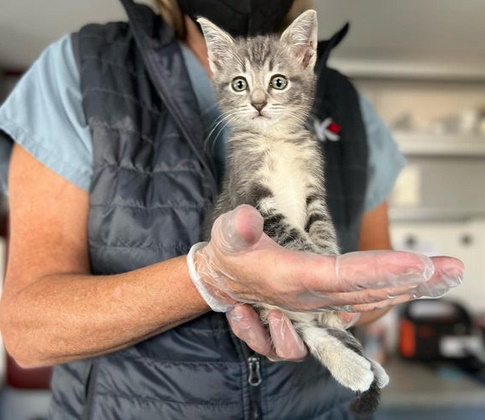
My second step is a big smile, as a new “movie” plays in my head.
I hear Dr. Reidenbach and Dr. Kuzminski explain, “We’re really interested in that link between suffering of animals and the suffering of people. Every animal should have access to veterinary care regardless of their family’s economic status or their location…. There were some unmet needs in the community that we felt we absolutely had to get out and address. We worked in a municipal shelter where we saw a lot of abuse cases, and while we could help that animal in that moment, we really wanted to see what we could do to get ahead of that.”
I see the parade of photos on RK’s Facebook page of their clients—the many human DV survivors and their beloved companion animals on the road to safety and recovery.
My third step comes in the form of a little revelation…
Never in a million years could my father have imagined that his violence and sadism toward me and others, including my dog, would result in 1) me learning how to survive that malice, then 2) me some day growing strong enough to harness it as inspiration to help other human and nonhuman animals survive their own abusers.
I doubt those results were my father’s intentions for the “lessons” he felt compelled to “teach” me and my beautiful Zoe.
That gives me another, very big smile.
Rescue Diva will DOUBLE YOUR DONATIONS to Ruthless Kindness up to $1,000!
If you care about animals as well as about human survivors of domestic violence, and want to help, there’s no better time than now to give to Ruthless Kindness.
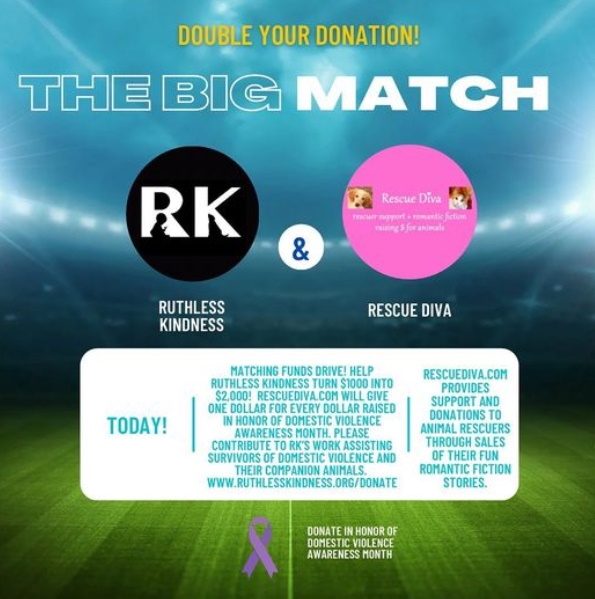
Our website RescueDiva.com will DOUBLE YOUR DONATIONS!
We’ll match everything you give to Ruthless Kindness, dollar for dollar, till we reach the goal of $2,000.
Every little bit you can donate counts, and right now it counts twice!
Follow this link to the Ruthless Kindness donation page.
Rescue Diva proudly helps needy animals in the U.S. and around the world, such as:
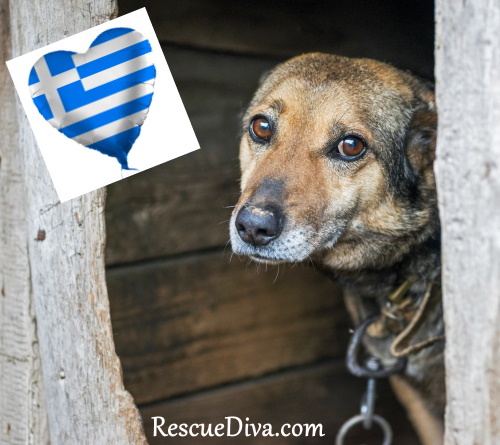
~ Diva assists Kefalonia Animal Trust (KATs) in Greece to provide free spay/neuter for hundreds of animals per year, which is one of the best ways to prevent the abandonment and misery of puppies like Noah and Kyla.
~ Diva donates to Center for Animal Protection and Education (CAPE), Praying for Paws, Southern California Siamese Rescue, Aniplant (Cuba) and many other groups.
~ Diva does in-the-trenches rescues of angels like Robin, Chance, and Tiger, with help from San Diego Animal Support Foundation; of Marisol and Lisa, with help from Last Chance at Life; of Mandi (Diamandi), with help from Graeske Hunde, and of Roki, with help from Stichting AAI.
About the author:
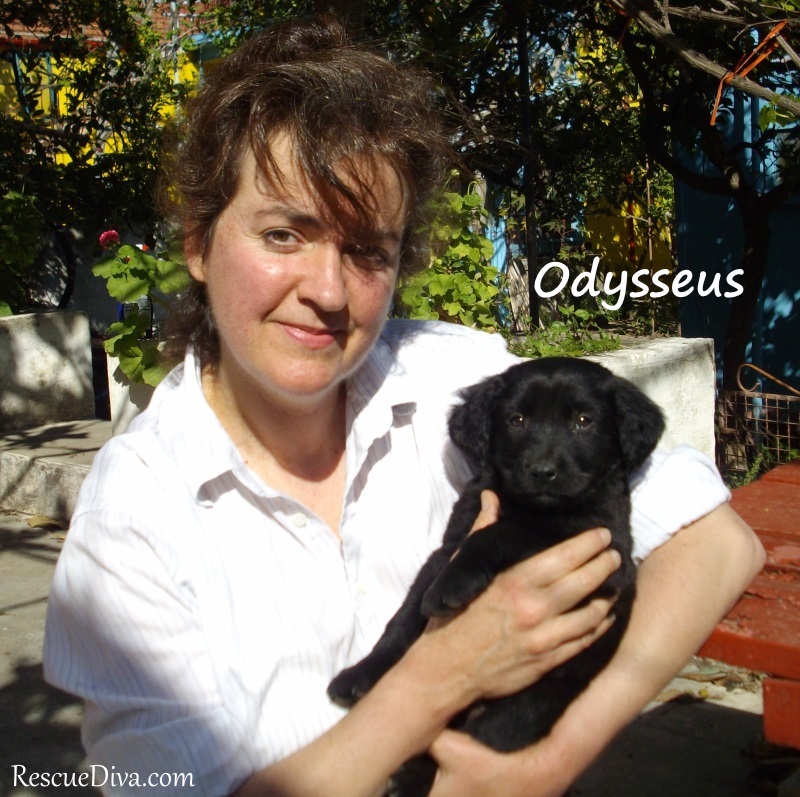
Katerina Lorenzatos Makris is a career journalist, author, and editor. Her fiction includes 17 novels for Simon and Schuster, E.P. Dutton, Avon, and other major publishers (under the name Kathryn Makris), as well as a teleplay for CBS-TV, and a short story for The Bark magazine.
Katerina has written hundreds of articles for regional wire services and for outlets such as National Geographic Traveler, The San Francisco Chronicle, Travelers’ Tales, NBC’s Petside.com, and Animal Issues Reporter.
Together with coauthor Shelley Frost, Katerina wrote a step-by-step guide for hands-on, in-the-trenches dog rescue, Your Adopted Dog: Everything You Need to Know About Rescuing and Caring for a Best Friend in Need (The Lyons Press), coming soon in digital format!
PLEASE NOTE: If you currently feel unsafe and/or abused, there are folks waiting to help. You may dial 9-1-1, or contact the following agencies to learn about free counseling and many other types of assistance.
DOMESTIC VIOLENCE AND ABUSE RESOURCES:
National Domestic Violence Hotline – 1.800.799.SAFE (7233)
Break the Silence Against Domestic Violence
Domestic Violence Resource Center